Process / 4 engagement phases

A disciplined process for every engagement.

Every TekDatum engagement runs the same arc: discovery, strategy, execution, delivery. Below is how that plays out in practice — for AI and data science engagements alike.

Engagement arc · 04 phases

The engagement plan.

01 Discovery

Understand requirements, business context, and success criteria.

  • Stakeholder workshops with engineering and product teams
  • Data surface and access mapping
  • Success criteria and measurable KPIs
  • Initial brief document
02 Strategy

Define architecture, technology selection, and roadmap.

  • Reference architecture and technology selection
  • Team structure and resource planning
  • SoW and delivery roadmap
03 Execution

Agile sprints with continuous quality checks and transparent reporting.

  • Embedded squads working in two-week sprints
  • Continuous quality checks and testing
  • Weekly demos and transparent reporting
  • Knowledge transfer throughout
04 Delivery

Ship to production. Operate or hand off cleanly.

  • Production deployment and runbooks
  • Monitoring and maintenance setup
  • Model upgrades and re-evaluation
  • Knowledge transfer or managed operation
Service process · Data Science & AI

From problem definition to production.

We create business-driven data science solutions based on our understanding of your business needs, audience, and goals. We select the ML implementation approach that is cost-effective for your organization, implement the solution, and integrate it with your existing business processes.
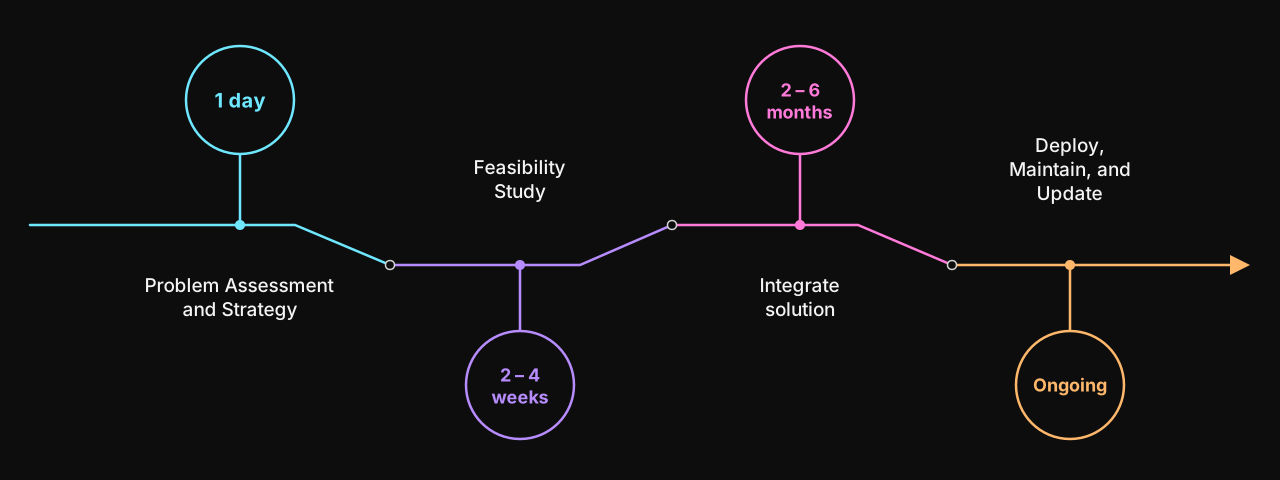
Data Science Process at TekDatum

Data Science Process at TekDatum

01

Problem Definition

The problem is defined in clear, measurable terms. We work with stakeholders to identify the business problem or opportunity, limit the scope of the project, and determine the success criteria.

02

Data Collection

We identify the data sources that will be used to solve the problem — collecting and storing data in a way that is consistent with project goals and business requirements.

03

Data Preparation

The data is transformed and cleaned to ensure it is accurate and ready for analysis. This includes removing duplicates, filling in missing values, and converting data types.

04

Exploratory Data Analysis

The data is explored to identify patterns, relationships, and trends relevant to the problem. This involves data visualization and statistical analysis to surface actionable insights.

05

Feature Engineering

We select and transform variables in the data to create new, meaningful features that can be used to build more accurate and reliable predictive models.

06

Model Building

Predictive models are developed using statistical algorithms and machine learning techniques. Models are trained on the data and evaluated to determine their accuracy and performance.

07

Model Deployment

Once developed, the model is deployed in a production environment where it can be used to make predictions or inform business decisions — integrated with existing processes.

08

Monitoring & Maintenance

As data changes over time, model performance can deteriorate. We monitor the model continuously to ensure it performs well and update it as needed to maintain accuracy.
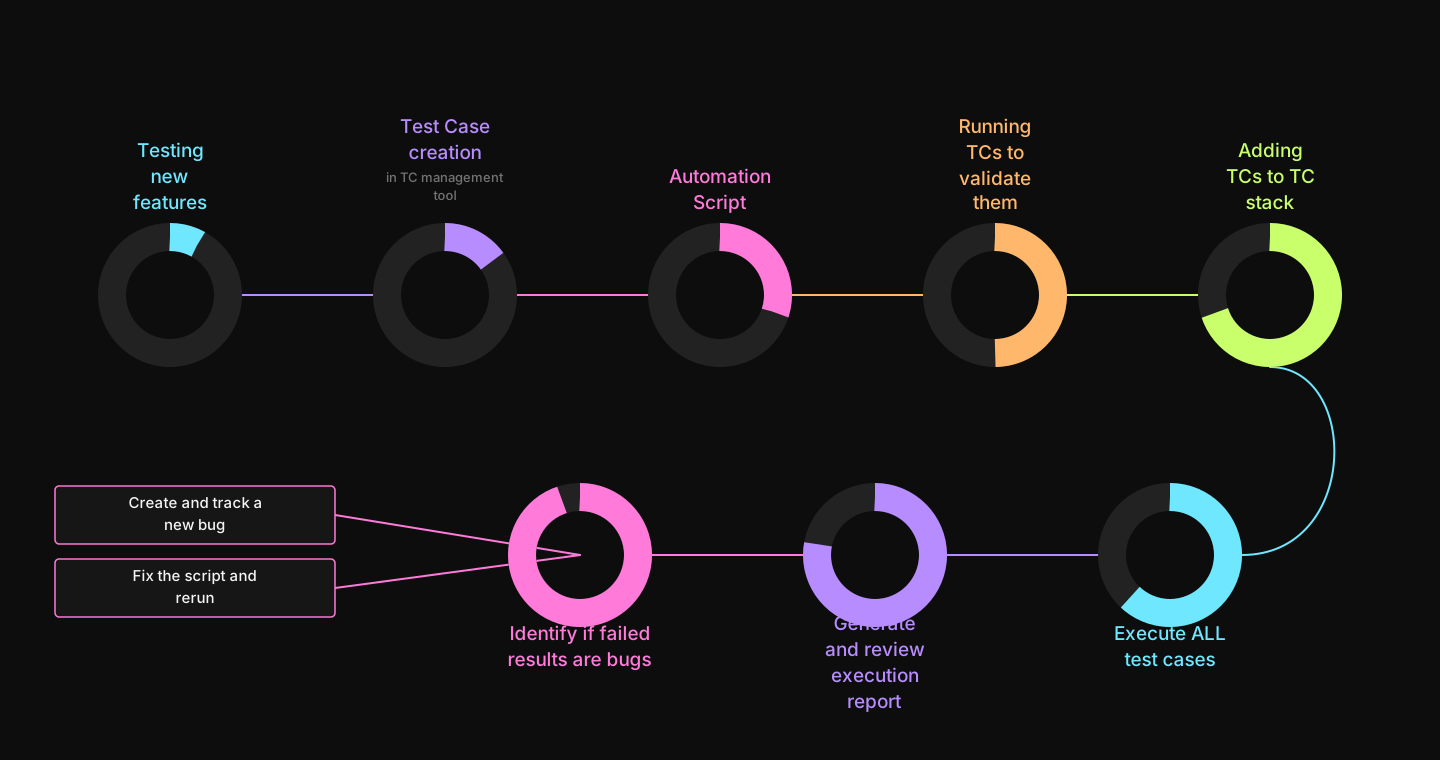
Service process · Testing & Automation

Test Case Creation and Automation Flow.

TekDatum's Testing Managed Services are specially designed to support your product, project, and team. Our experienced Automation Engineers work closely with your development team to create a customized testing strategy that fits your specific needs:

Cost savingsWe handle sourcing, training, and managing the testing team — saving you time and money on recruiting, onboarding, and retention.
Predictable costsKnow the exact cost upfront and budget accordingly, without unexpected expenses or delays.
High-quality workIssues are addressed before release, reducing the risk of negative feedback and customer churn.
Continuous improvementWe continuously monitor and optimize the testing strategy for higher quality and more reliable software.
FlexibilityOur team adapts to changes in your business needs and technology landscape as you grow.
Test Case Creation and Automation Flow at TekDatum

Standard Test Case Creation and Automation Flow at TekDatum

01

Requirements Review

The testing team reviews requirements documents during each sprint cycle and performs exploratory testing to understand feature requirements better. They meet with BAs and developers for clarifications, and review wireframes and prototypes in preparation for the test process.

02

Environment Setup

A test server is built completely separate from development or production. Automation tools, regression test runners, and client environments (browsers, mobile devices) are configured. Project tooling for bug tracking and case management is set up at this stage.

03

Test Case Design

Each user story receives at least one test case covering its functionality. We use industry-standard test case management tools and produce a Test Plan that guides the entire execution phase.

04

Test Case Execution

With a stable build and a test plan in place, the testing team executes each test case — automated via scripts or manually by a tester. Test management tools provide a live overview of test status and surface issues along the way.

05

Bug Management

We follow a structured bug lifecycle to ensure every defect is tracked, prioritized, and resolved efficiently. Statuses: Open (In Progress, Waiting for Info), Resolved, Closed. Resolutions: Fixed, Cannot Reproduce, Duplicate, By Design, Won't Fix.

06

Regression Test

Full regression testing ensures new changes did not break existing features — both manual and automated. Web API automation (REST and SOAP) is included depending on project requirements.

07

Reports

Daily test reports provide information about bugs and areas of the system that need attention. Historical reports and regression test summaries are available for deeper analysis, as well as ad-hoc reports for project managers and other stakeholders.

Start with discovery.